
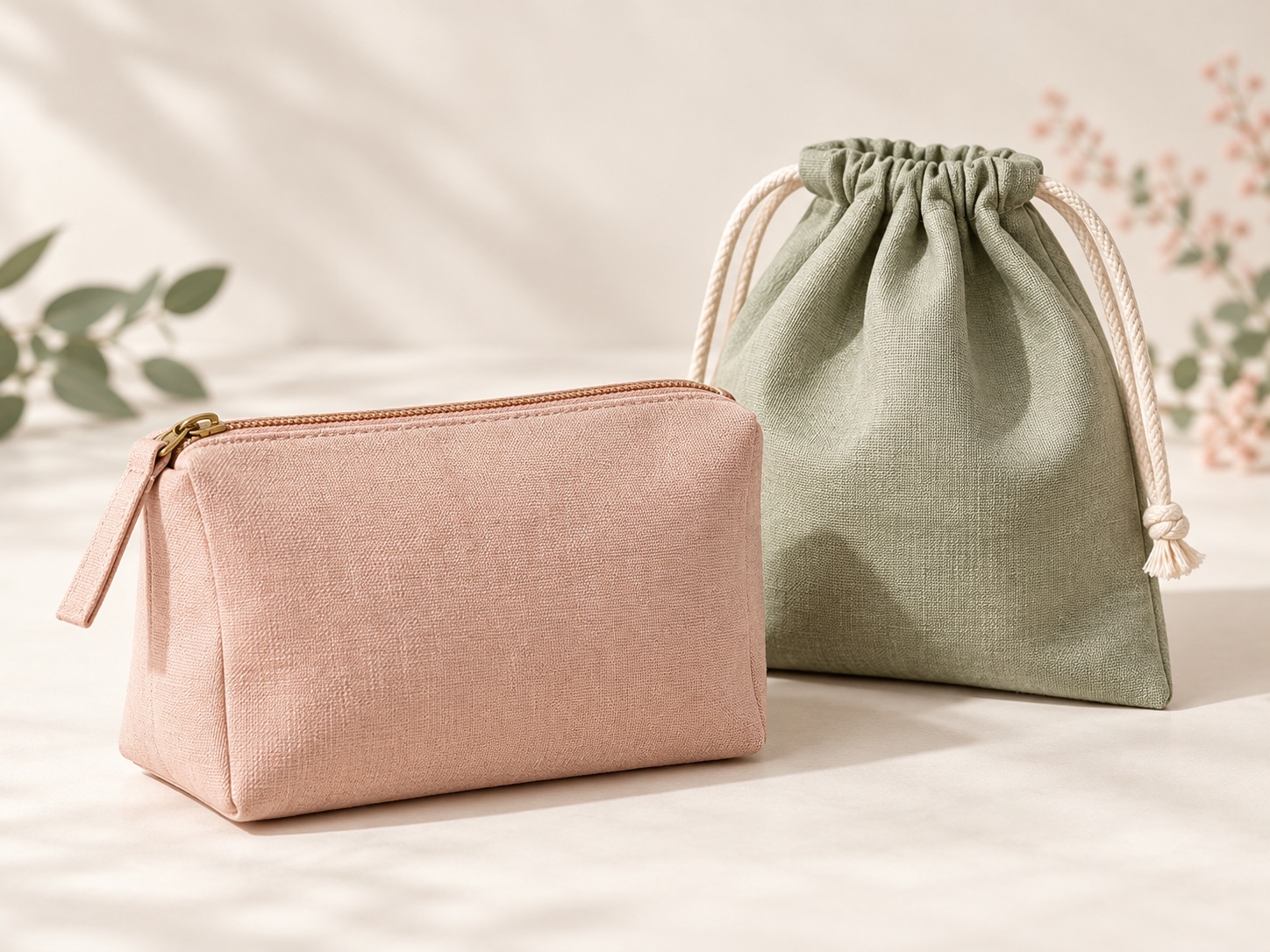
This sample shows the complete story and layout to use when preparing a real case study. The brand and situation below are invented for illustration; all bracketed fields must be replaced with approved facts, evidence and permission details.
Project snapshot
- Customer / brand: Fictional skincare brand (replace with an approved name or anonymous description)
- Industry and market: Beauty & Cosmetics · [Country or region]
- Product: Travel organizer pouch for a skincare set
- Publication status: Fictional sample only — no customer, permission, order or outcome is represented.
Starting brief
Fictional example brief: “We are preparing a travel-size skincare set and need a branded pouch that keeps the items together and is easy to pack.” For a real case, replace this with a short, permission-cleared summary of the customer’s intended use, contents, target user, market and launch context.
The project challenge
Illustrative challenge: The pouch needs to fit the confirmed contents without unnecessary bulk, keep the opening convenient and present the brand clearly. Replace this with the actual design, use, material, packaging, cost or timing challenge documented for the project.
Design and product solution
Illustrative development route: Compare a compact pouch shape with the confirmed product contents, then review the opening, internal organization, carry details and branding placement. Record the approved construction, dimensions, finish, branding method and packaging only after the customer signs off the sample or specification.
Materials and processes considered
Example fields: Outer material [confirmed type and specification]; lining [confirmed type]; closure and trims [confirmed options]; decoration [approved method]. Explain what was evaluated, why the final option was selected and any limitations discussed. Do not list a material or process just because it appears elsewhere on the website.
Sampling and revisions
- First sample: [Date] · Check fit, opening and overall dimensions against the brief · [Add photos and review notes]
- Revision: [Record the requested change, such as compartment depth or logo position; include only what actually changed]
- Approval: [Final sample/specification version, approval date and approver]
Production and quality plan
[Describe the confirmed production specification, material confirmation, in-process and final checks, acceptance criteria, packaging checks and any testing coordination that actually occurred. Link each checkpoint to project evidence where possible.]
Outcome
[Add only verified outcomes approved for publication: order quantity, delivery milestone, reorder, customer feedback or measured improvement. Include the source and date for each result. If a value is confidential or unavailable, omit it.]
Evidence to prepare
- Customer brief or a publishable summary
- Original concept, approved drawings and sample-development images
- Material and process references
- Approval record and permission for each public image or brand name
- Verified project dates and outcome facts
Internal publication checklist: [Named public / anonymized public / internal only] · [Approver] · [Permission date] · [Approved assets] · [Facts still to confirm].